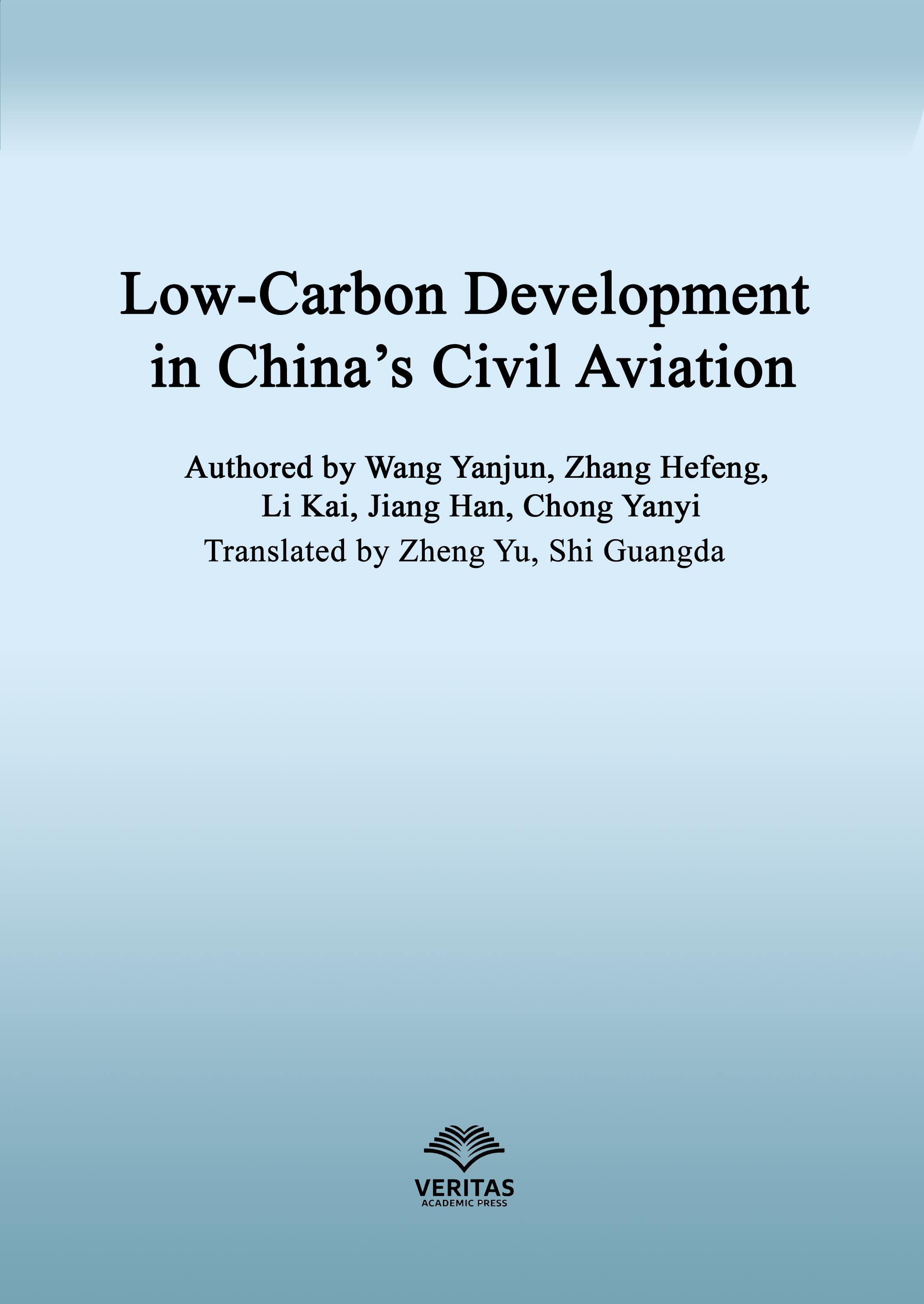
Low-Carbon Development in China’s Civil Aviation
Publication information
- ISBN
- 9781969413643
- Contributors
- Wang Yanjun
- Translators
- Zheng Yu; Shi Guangda
About this book
Since the Industrial Revolution, human activities have released vast amounts of CO₂, driving climate change through extreme weather, sea-level rise, ecosystem shifts, and more. Global greenhouse gas emissions hit a record 54 billion tons of CO₂ equivalent in 2019; although they dipped by 7% in 2020 due to the pandemic, the long-term trend remains upward. In response, international frameworks like the UNFCCC and Kyoto Protocol promote carbon markets based on “common but differentiated responsibilities.”
As a top emitter, China plays a pivotal role. President Xi Jinping pledged at the 75th UN General Assembly that China would peak CO₂ emissions before 2030 and achieve carbon neutrality by 2060. This commitment has been integrated into national strategies, including the “14th Five-Year Plan” and a comprehensive “1+N” policy system for carbon peaking and neutrality. By 2022, China had cut its carbon intensity by over 51% from 2005 levels, with non-fossil energy reaching 17.5% of total consumption.
The civil aviation sector—responsible for about 2% of global CO₂ emissions—is growing rapidly. IPCC data shows aviation emissions rose 26% between 2010 and 2013, with projections indicating further increases despite efficiency gains. Recognizing this, China’s Civil Aviation Administration launched the “14th Five-Year Plan for Green Development in Civil Aviation” in 2021, promoting market-based mechanisms and low-carbon transformation.
This book synthesizes recent research on low-carbon development in China’s civil aviation industry—from policy frameworks and emission trends to technological innovation and management practices—offering insights and references for policymakers, airlines, researchers, and enterprises committed to sustainable aviation.
Related publications
The Awakening of Education in China (1912–1949)
The Awakening of Education in China(1912-1949) is systematically gathering Tao Xingzhi’s core educational discourses found in newspapers, speeches, and letters and concentrates the essence of his thoughts as the "People's Educator" and stands as an enlightening manifesto in the process of China's educational modernization. The…
History of the Development of Chinese Handicrafts and Commerce
The History of the Development of Chinese Handicrafts and Commerce was compiled by Tong Shuye during his teaching at Shandong University in the 1950s. This book takes the handicraft and commerce of China before the Opium War as its research object, systematically tracing the evolution…
The Character of the Chinese People
"The First President of Tsinghua University: A Life Philosophy/Inspirational Masterpiece Written Exclusively for Chinese Youth"(Next year marks the centennial of Tsinghua University.)Part of this book, New Philosophy of Life, influenced generations during the late Anti-Japanese War and in Taiwan during the 1960s–70s, becoming a must-read…